


Introduction
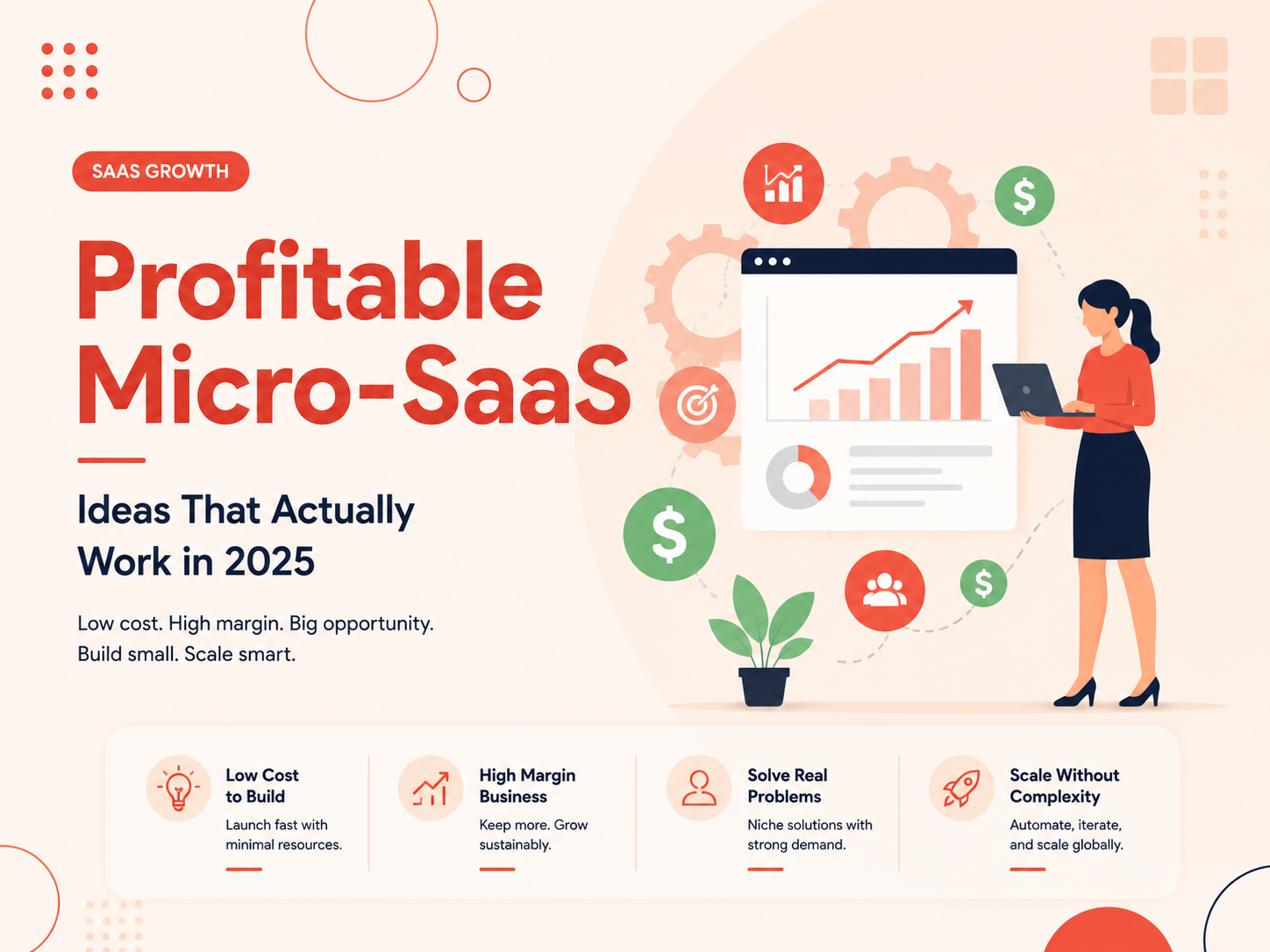
In 2025, startups are no longer defined by massive funding rounds or large teams. Instead, a growing number of founders are building Micro-SaaS products — small, focused software solutions that solve one clear problem extremely well. With cloud infrastructure, AI APIs, and global payment systems easily accessible, even solo founders can now build sustainable SaaS businesses.
This guide explores Micro-SaaS ideas that actually work in 2025, along with practical strategies for validation, pricing, marketing, and scaling.
What Is Micro-SaaS?
Micro-SaaS refers to a small-scale software-as-a-service business that:
- Targets a niche audience
- Solves a specific pain point
- Has low development and operational costs
- Generates recurring subscription revenue
- Can be managed by one person or a small team
Unlike large SaaS platforms, Micro-SaaS prioritizes simplicity, focus, and long-term sustainability.
Why Micro-SaaS Is Thriving in 2025
- Low startup costs thanks to serverless and cloud tools
- Faster launch cycles with MVP-first development
- Predictable recurring revenue through subscriptions
- Less competition by targeting narrow niches
- Perfect fit for developers and indie hackers
Micro-SaaS Ideas That Actually Work in 2025

1. AI Resume Analyzer for Recruiters
An AI-driven tool that evaluates resumes against job descriptions and ranks candidates.
2. Automated Invoice Follow-Up Tool
A system that sends polite reminders for unpaid invoices — ideal for freelancers and agencies.
3. Social Media Caption Generator for Local Businesses
Generates ready-to-post captions tailored for salons, gyms, cafes, and local shops.
4. Compliance Reminder Tool for Small Businesses
Automated reminders for tax filings, license renewals, and regulatory deadlines.
5. Customer Feedback Analyzer for SaaS Founders
Uses AI to summarize feedback and highlight recurring issues from support tickets and reviews.
6. Appointment No-Show Reduction Tool
Automated SMS and email reminders for clinics, salons, and consultants.
7. Website Performance Monitor for Non-Technical Users
Alerts users in simple language when their website is slow or offline.
8. Internal Tool Builder for Small Teams
A lightweight platform to build dashboards, reports, and admin panels without coding.
9. Email Deliverability Checker
Checks spam risk, domain health, and inbox placement for marketing emails.
10. Offline-First Field Data Collection App
Designed for inspectors, surveyors, and workers operating in low-network environments.
How to Choose the Right Micro-SaaS Idea

Founder–Market Fit
Build for a problem you understand deeply or have personally experienced.
Pain Level Validation
High-pain problems usually involve time loss, money loss, or repeated frustration.
Pricing Strategies That Work
- Flat monthly pricing for simplicity
- Tiered plans to increase average revenue
- Usage-based pricing for scalable tools
- Annual subscriptions for better cash flow
Marketing Micro-SaaS Without Big Budgets
- Content marketing and SEO
- Indie Hacker and developer communities
- Product Hunt launches
- Strategic partnerships
- Targeted, personalised outreach
Security and Compliance Basics
Even Micro-SaaS products must implement:
- HTTPS and encrypted data storage
- Secure authentication
- Regular backups
- Clear privacy policies
Trust is critical in B2B software.
Recommended Tech Stack (2025)
- Frontend: React, Next.js, Flutter Web
- Backend: Node.js, Python, serverless functions
- Database: PostgreSQL, Supabase, Firebase
- Payments: Stripe, Paddle
- Hosting: Vercel, AWS, Cloudflare
Common Reasons Micro-SaaS Fails
- Building without validation
- Feature overload
- Poor onboarding
- Weak positioning
- Ignoring user feedback
Micro-SaaS usually fails due to neglect, not competition.
Metrics Every Founder Should Track
- Monthly Recurring Revenue (MRR)
- Churn rate
- Customer Acquisition Cost (CAC)
- Lifetime Value (LTV)
- Retention and activation rates
Scaling Micro-SaaS the Smart Way
Scaling does not always mean hiring or raising capital. Smart scaling focuses on:
- Improving onboarding
- Reducing churn
- Gradual price optimisation
- Automation and integrations
Final Thoughts
Micro-SaaS is not about chasing trends. It is about solving one real problem for one clear audience with a simple, reliable solution. In 2025, clarity, focus, and execution matter more than complexity.
Build small. Validate early. Scale sustainably.
Real-World Validation Checklist Before You Build

Before writing a single line of code, use this checklist to reduce risk:
- Talk to at least 10 real users in your target niche
- Confirm they currently use a workaround (Excel, WhatsApp, manual tracking)
- Ask what they hate most about the current solution
- Verify they are willing to pay monthly, not just try it
- Test interest with a landing page and waitlist
If people won’t commit time or money early, they likely won’t later.
Customer Onboarding: The Most Underrated Growth Lever
Many Micro-SaaS products fail not because the product is bad, but because users don’t understand it quickly.
Best practices for onboarding:
- One clear value message on first login
- Minimal setup steps
- Pre-filled demo data
- Short product walkthrough (not long tutorials)
- Instant success moment within 5 minutes
A smooth onboarding experience can double retention without adding features.
Customer Support Without Burning Out
As a solo founder or small team, support must be efficient.
Smart support strategies:
- Build a strong help center early
- Use in-app tooltips instead of long documentation
- Automate common replies
- Add feedback buttons inside the app
- Track recurring support issues and fix them permanently
Great support builds trust and reduces churn.
Legal Basics Every Micro-SaaS Needs
You don’t need a legal team, but you do need basics:
- Terms of Service
- Privacy Policy (especially for GDPR compliance)
- Clear refund policy
- Transparent data usage explanation
These protect both you and your customers and increase credibility.
When to Quit, Pivot, or Double Down
Not every idea should be pushed forever. Know the signals:
Quit when:
- No user interest after multiple validation attempts
- Users won’t pay even after improvements
Pivot when:
- Users use the product differently than expected
- A secondary feature becomes more valuable than the main one
Double down when:
- Users recommend it organically
- Churn is low and engagement is high
Listening to data matters more than emotions.
Long-Term Mindset for Micro-SaaS Founders

Micro-SaaS is not a quick-rich scheme. It rewards:
- Patience over hype
- Consistency over speed
- Simplicity over complexity
Many successful Micro-SaaS products grow quietly for years before becoming highly profitable.
❓ FAQs
Q1. Can a solo developer build Micro-SaaS?
Yes. Many successful Micro-SaaS products are run by one person.
Q2. How much money can Micro-SaaS make?
Anywhere from $500/month to $50,000+/month depending on niche and execution.
Q3. Is coding required?
Not always. No-code and low-code tools can help, but coding gives flexibility.
Q4. Which tech stack is best?
Flutter, React, Node.js, Python, Firebase, Supabase, Stripe.
Q5. How long does it take to launch?
2–8 weeks for a focused MVP.
Final Takeaway
Micro-SaaS success in 2025 comes down to three things:
- Solve a painful, specific problem
- Serve a clearly defined audience
- Deliver consistent value with minimal friction
If you focus on these fundamentals, Micro-SaaS can become one of the most stable and rewarding digital business models available today.