


🚨 Introduction
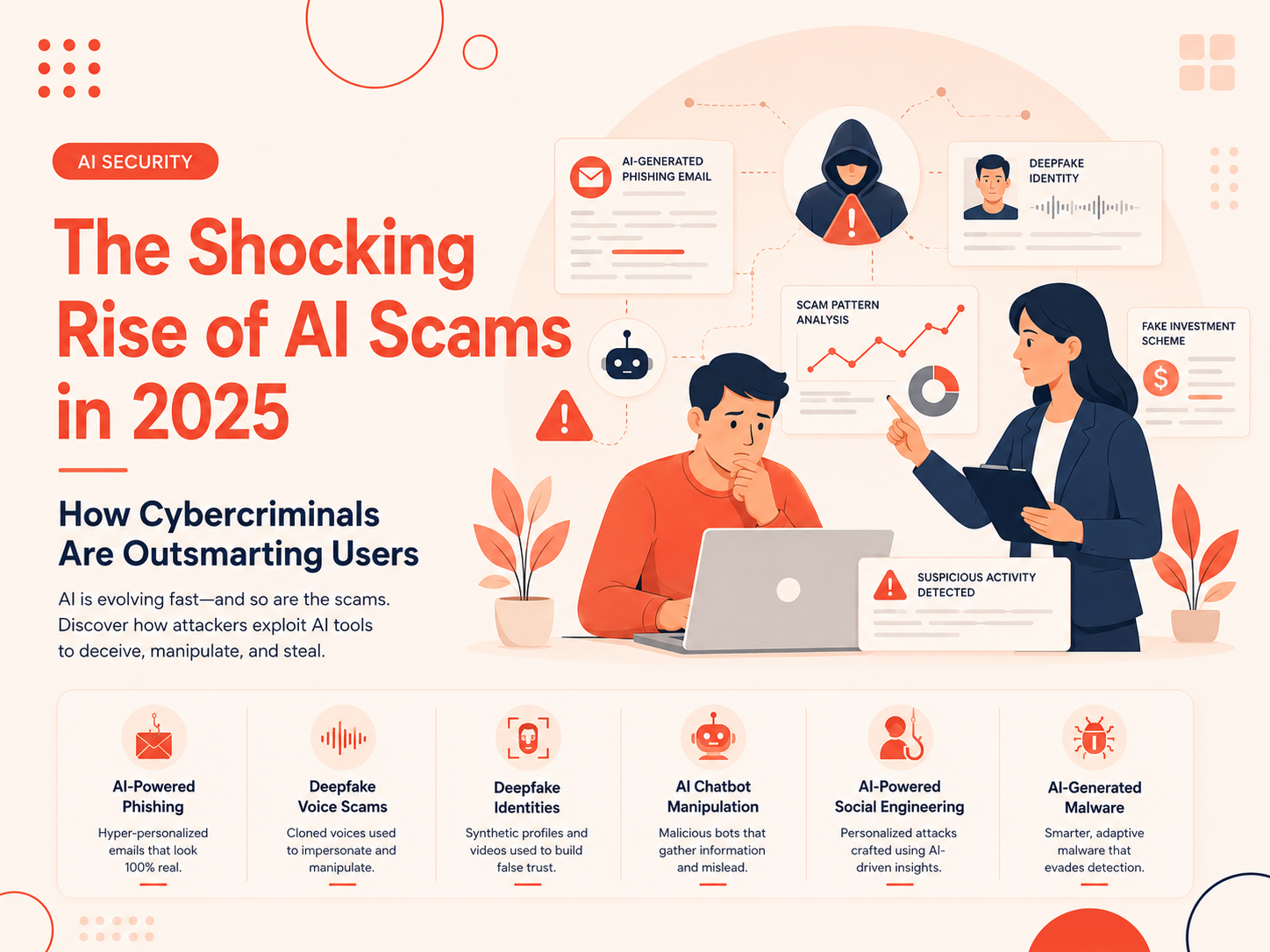
Artificial Intelligence has become one of the most powerful tools of the decade — improving productivity, automating tasks, and transforming industries. But in 2025, the same AI technologies driving innovation are also powering a darker trend: AI-powered cyber scams.
Cybercriminals are now using AI to generate fake voices, realistic videos, phishing messages, and even full identities — making scams harder to detect than ever before. The result? A dramatic rise in fraud cases across social media, banking apps, job platforms, and communication tools.
In this blog, we expose how AI scams work in 2025, why they’re spreading so fast, and how you can protect yourself from becoming the next victim.
🧠 Why AI Scams Are Exploding in 2025
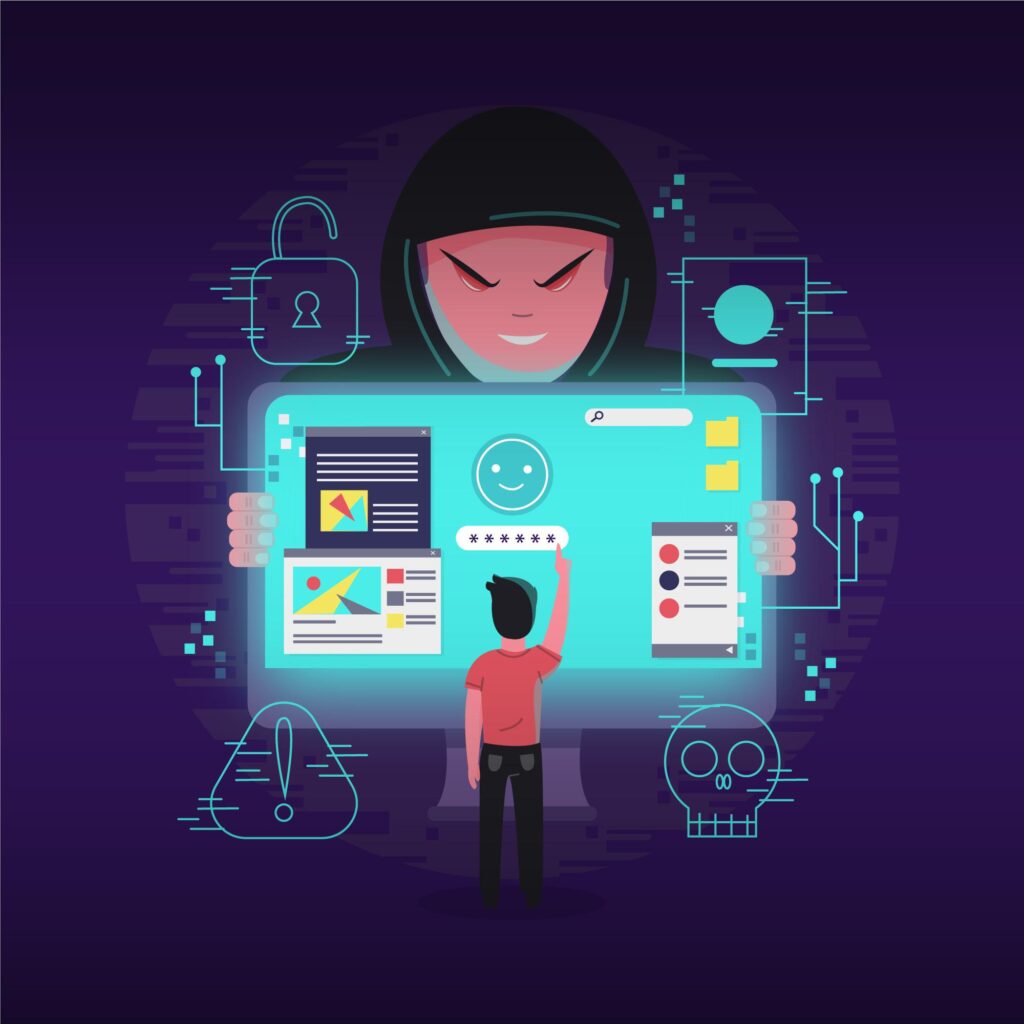
The explosion of AI scams isn’t accidental. It’s happening because:
AI tools are accessible to everyone (not just developers)
Fake images, voices, and conversations look real
Social media makes scams easy to spread
People trust automation and technology too easily
AI can personalise scams using leaked personal data
Scammers no longer need technical skills. With a few clicks, they can build convincing fake personas and emotionally manipulate victims.
🎭 Most Dangerous AI Scams in 2025
1. Deepfake Video Scams
Cybercriminals create fake videos of CEOs, politicians, or relatives asking for money or confidential data. These fake videos look terrifyingly real.
Example: A fake video of your manager asking for a “confidential transfer” — urgently.
2. AI Voice Cloning Attacks
Scammers clone a person’s voice from just a few online clips and then call family members for emergency funds or confidential information.
Example: A fake “dad” or “boss” calling for urgent money.
3. AI Phishing Emails & Messages
Instead of broken-English phishing emails, AI now writes perfect human messages that sound personal, professional, and emotional.
Example: Fake password reset emails that look 100% real.
4. Fake AI Job Interviews
Victims attend online interviews run by AI chatbots pretending to be recruiters. Applicants are fooled into giving personal documents and banking details.
5. Romance Scams Powered by AI Chatbots
AI bots now hold relationships with victims for months, emotionally manipulating them into sending money or crypto.
6. AI-Generated Fake Apps
Fake apps mimic real banking, investment, or AI platforms and steal login credentials and payment details.
7. AI Investment Scams
Fraud AI bots hype fake coins and giving “guaranteed profit” advice using realistic predictions.
8. AI Customer Support Fraud
Scammers pose as support agents and trick users into revealing OTPs, passwords, or private keys.
9. Fake News & Political Scam Campaigns
AI spreads fake news videos that manipulate users emotionally to push donations, fake charities, or political scams.
🧬 What Makes AI Scams Hard to Detect?
Unlike old scams, AI scams:
Use real names and locations
Copy writing style and tone
Use fake voices and faces
Reply instantly with believable answers
Learn from your social media data
In short, AI doesn’t just trick people — it studies them first.
🛡️ How to Protect Yourself from AI Scams in 2025
✅ Always Verify Requests
Call back on official numbers. Never trust videos or messages alone.
✅ Use Multi-Factor Authentication
Protect every important account with extra verification layers.
No legitimate company ever asks for them.
✅ Watch for Urgency & Emotion
AI scams often push panic or emotional pressure.
✅ Verify Social Profiles
Fake accounts use stolen photos and AI bios.
✅ Use Scam Detection Tools
Browser extensions and apps now detect AI-written scams.
✅ Educate Family Members
Especially elders and teens — the most targeted groups.
📊 The Real Impact of AI Scams
AI scams are not just technical problems — they cause:
Financial devastation
Emotional trauma
Identity theft
Loss of trust in digital systems
Psychological manipulation
For some victims, recovery can take years.
🔮 The Future of AI Fraud
Cybersecurity experts warn:
Scams will become hyper-personalised
AI bots will fully replace humans in scam operations
AI-generated fake companies will emerge
Voice authentication may be broken
The battle will increasingly be AI vs AI — scams vs prevention systems.
❓ FAQs
Q1. Are AI scams worse than traditional scams?
Yes. They look real, speak real, and behave real — making them far more dangerous.
Q2. Can antivirus detect AI scams?
Modern tools can detect some threats, but human awareness is still crucial.
Q3. Can AI fake someone’s real voice?
Yes. Just a few seconds of audio is enough.
No platform is immune. All are targeted by AI scams.
Q5. What should I do if I fall for a scam?
Report immediately, freeze accounts, alert your bank, and change credentials.
🧩 Final Thoughts
AI in 2025 is both a blessing and a dangerous weapon.
Cybercriminals now use intelligence, emotion, and automation as their tools — making scams harder than ever to detect.
But awareness is power.
By staying alert, verifying information, and thinking critically, you can stay one step ahead of AI-powered fraud.