


Introduction
As cyber threats evolve at lightning speed, traditional security measures are no longer enough.
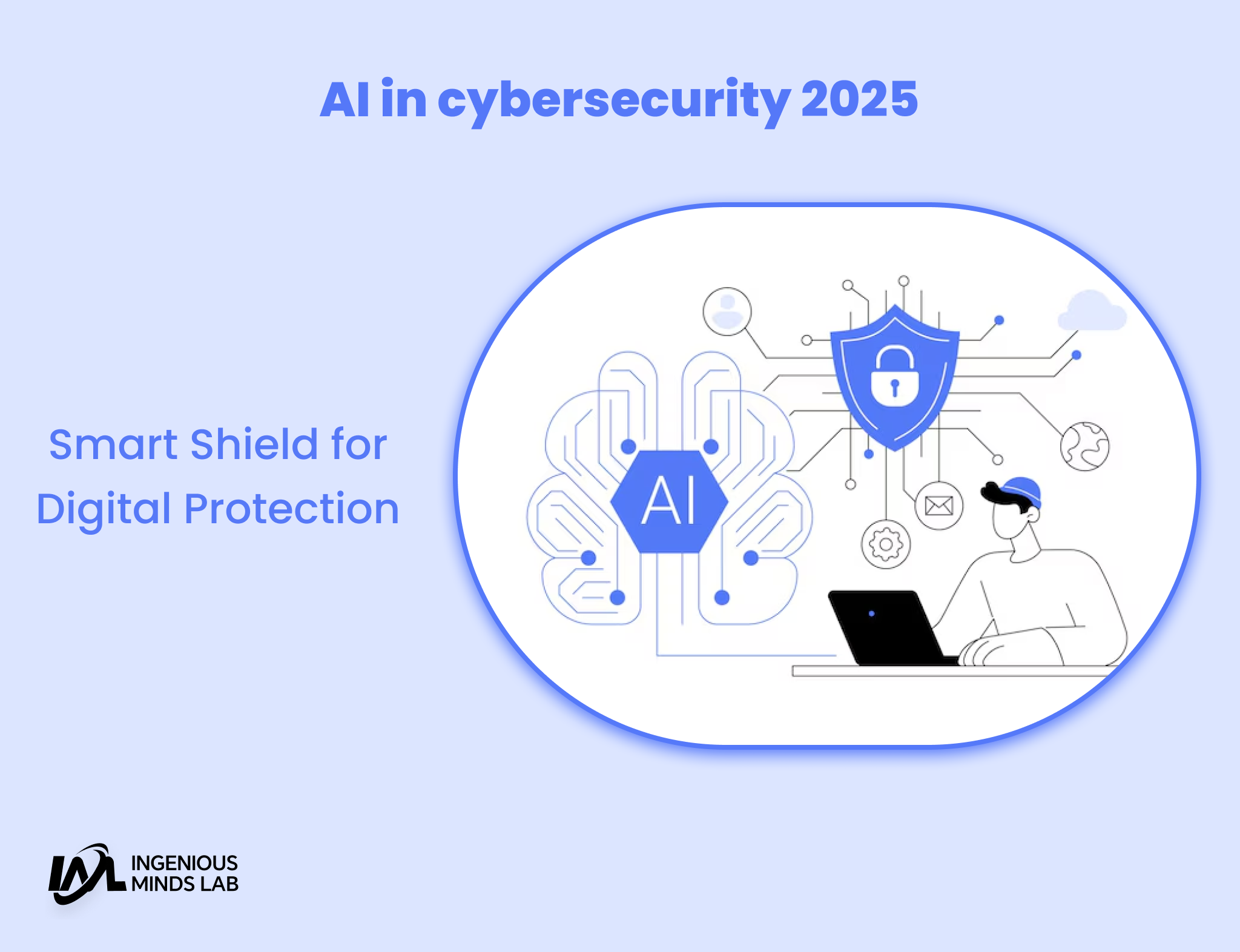
In 2025, AI in cybersecurity is emerging as a smart shield — capable of detecting, predicting, and neutralising threats faster than humans.
From automated threat detection to real-time anomaly analysis, AI is transforming how organisations protect their digital assets. This blog dives into how AI is revolutionising cybersecurity, its benefits, challenges, and future trends.
1. How AI is Revolutionising Cybersecurity

a. Real-Time Threat Detection
AI systems analyse vast amounts of network traffic, identifying malware, ransomware, and phishing attacks in real time.
Detect patterns humans might miss
Respond instantly to mitigate threats
b. Predictive Threat Analysis
Using machine learning algorithms, AI predicts potential breaches before they occur.
Learns from historical attacks
Suggests proactive security measures
c. Automated Incident Response
AI can automatically isolate infected systems, block malicious IPs, and alert security teams, reducing response time from hours to seconds.
2. Benefits of AI in Cybersecurity
Faster Detection: AI processes huge datasets in seconds
Reduced Human Error: Automated systems reduce mistakes
24/7 Monitoring: AI never sleeps, protecting systems round the clock
Adaptive Security: AI evolves with new threats
Cost Efficiency: Reduces need for large manual security teams
3. Applications of AI in Cybersecurity
Network Security: Detects unusual traffic and intrusion attempts
Endpoint Protection: Protects devices from malware and ransomware
Email Security: Filters phishing attempts and malicious attachments
Fraud Detection: Monitors financial transactions for suspicious activity
Cloud Security: AI monitors cloud infrastructure for vulnerabilities
4. Challenges of AI in Cybersecurity
While AI is powerful, it’s not without hurdles:
Adversarial Attacks: Hackers can try to trick AI models
False Positives: AI may flag harmless actions as threats
Data Privacy Concerns: AI requires large datasets, raising privacy issues
Skill Gap: Organizations need AI-trained cybersecurity professionals
Solution: Combining AI with human expertise creates a balanced, resilient security approach.
5. The Future of AI in Cybersecurity (2025 and Beyond)
Explainable AI (XAI): AI decisions will be transparent and auditable
Integration with Blockchain: Immutable logs for secure AI decision-making
Edge AI Security: Real-time protection on IoT and edge devices
AI-Driven Cybersecurity Market: Explosive growth with AI-enabled tools for SMEs and enterprises
Autonomous Defense Systems: AI will detect and neutralize threats without human intervention
FAQs About AI in Cybersecurity
1. What is AI in cybersecurity?
AI in cybersecurity uses machine learning and intelligent algorithms to detect, predict, and prevent cyber threats automatically.
2. Can AI completely replace human cybersecurity experts?
No — AI enhances human capabilities, but human oversight is essential for complex decision-making and strategy.
3. How does AI detect cyber threats?
AI analyses network traffic, user behaviour, and historical attack patterns to identify anomalies and potential threats.
4. What industries benefit most from AI cybersecurity?
Finance, healthcare, government, e-commerce, and critical infrastructure benefit most due to high-value data and sensitive information.
5. Is AI cybersecurity safe for personal use?
Yes — AI-powered antivirus, threat detection, and password managers make personal digital life safer when used responsibly.
Conclusion
AI in cybersecurity is the smart shield for 2025, combining speed, intelligence, and adaptability to fight modern cyber threats.
Organizations and individuals who adopt AI-driven security solutions today will stay ahead of cybercriminals, protect sensitive data, and enjoy safer digital environments.