


Introduction
Blockchain technology is no longer just the backbone of cryptocurrencies like Bitcoin or Ethereum.
In 2025, blockchain is being adopted in supply chains, healthcare, finance, identity management, and more, revolutionizing the way businesses operate and securing digital trust like never before.
In this guide, we’ll explore how blockchain is transforming real-world industries and why it’s set to become a cornerstone of modern technology.

1. Blockchain in Supply Chain Management
Supply chains are complex, involving multiple parties, goods, and processes.
Blockchain brings transparency and traceability:
Track goods from origin to delivery
Reduce fraud and counterfeit products
Automate payments using smart contracts
Example: Walmart uses blockchain to track produce, reducing contamination risks and ensuring food safety.
2. Blockchain in Healthcare
Healthcare relies heavily on sensitive data. Blockchain ensures:
Secure patient records
Immutable audit trails
Easier data sharing across hospitals and labs
Example: Estonia’s digital health system leverages blockchain to give patients secure access to their medical history.
3. Blockchain in Finance & Banking
Beyond cryptocurrencies, blockchain is reshaping banking operations:
Faster cross-border payments
Fraud detection and prevention
Decentralized finance (DeFi) applications
Example: JP Morgan’s Onyx blockchain platform enables near-instant settlement for institutional payments.
4. Blockchain for Digital Identity
Digital identity is critical in a world of online services. Blockchain provides:
Self-sovereign identity
Tamper-proof verification
Reduced identity theft
Example: Microsoft’s ION project builds decentralized IDs for users globally, giving control of personal data back to individuals.
5. Blockchain for Sustainability
Blockchain helps companies verify sustainability claims:
Track carbon credits
Monitor renewable energy usage
Ensure ethical sourcing of raw materials
Example: IBM’s Food Trust platform uses blockchain to verify ethical sourcing in the coffee supply chain.
Challenges in Blockchain Adoption
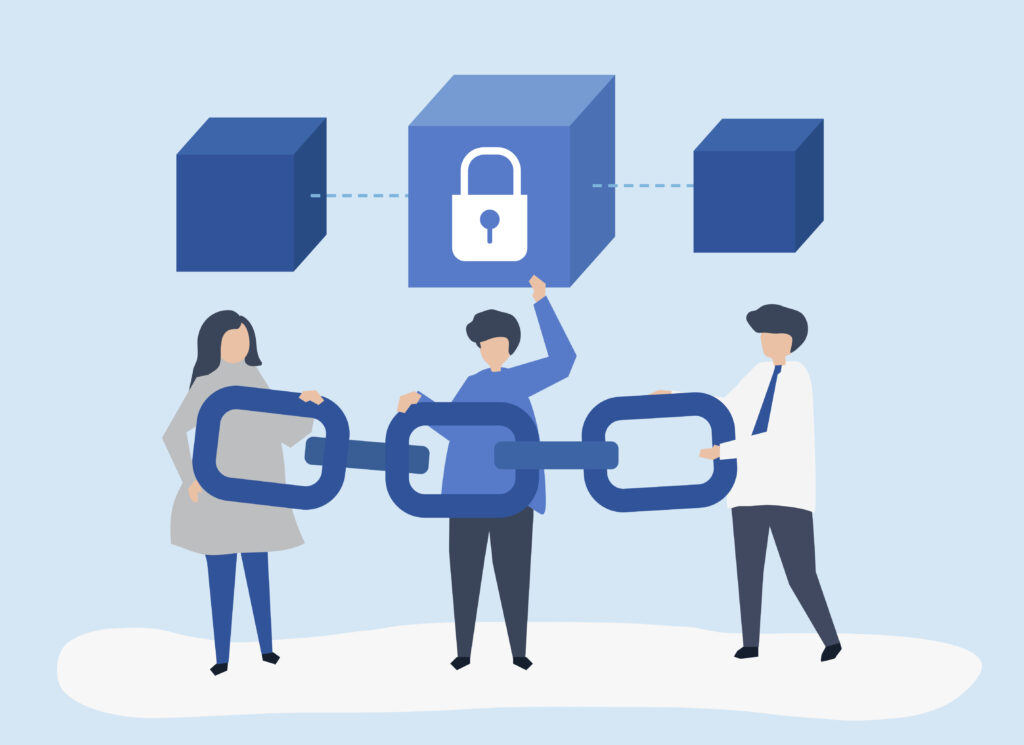
While blockchain is powerful, there are challenges to overcome:
Scalability issues with large networks
Energy consumption (although newer consensus methods are greener)
Regulatory uncertainty in some regions
Adopting blockchain requires careful planning, robust infrastructure, and clear governance.
The Future of Blockchain in 2025 and Beyond
Blockchain is moving from hype to practical, real-world applications.
Key trends include:
Interoperable blockchains for cross-network communication
AI + Blockchain for predictive analytics and smarter automation
Enterprise adoption in non-financial sectors
Green and energy-efficient blockchain solutions
By 2025, blockchain will be less about crypto speculation and more about trust, transparency, and efficiency.
FAQs About Blockchain in 2025
1. Is blockchain only for cryptocurrencies?
No — in 2025, blockchain powers supply chains, healthcare, finance, identity, and more beyond crypto.
2. How does blockchain improve supply chain transparency?
Each transaction is recorded immutably, making it easy to track goods, verify authenticity, and reduce fraud.
3. What is a smart contract?
A smart contract is a self-executing contract on the blockchain that automates agreements without intermediaries.
4. Can blockchain reduce healthcare data breaches?
Yes — blockchain’s immutable and encrypted ledger ensures secure patient data sharing while preventing unauthorized access.
5. What industries are adopting blockchain fastest in 2025?
Supply chain, healthcare, finance, government services, and sustainability-focused industries are leading blockchain adoption.
Conclusion
Blockchain in 2025 is no longer confined to cryptocurrencies.
It’s transforming industries, securing digital trust, and enabling new business models.
Embracing blockchain today means greater transparency, efficiency, and innovation for tomorrow’s businesses.